



Literacy, everyone seems to agree, is in a bad way.
In California—the richest state in the richest country in the world—half of public school fourth graders fail to meet grade-level standards for English.1
In Kenya, Tanzania, and Uganda, around 75% of third-grade students could not understand a sentence as simple as “the name of the dog is Puppy”.2
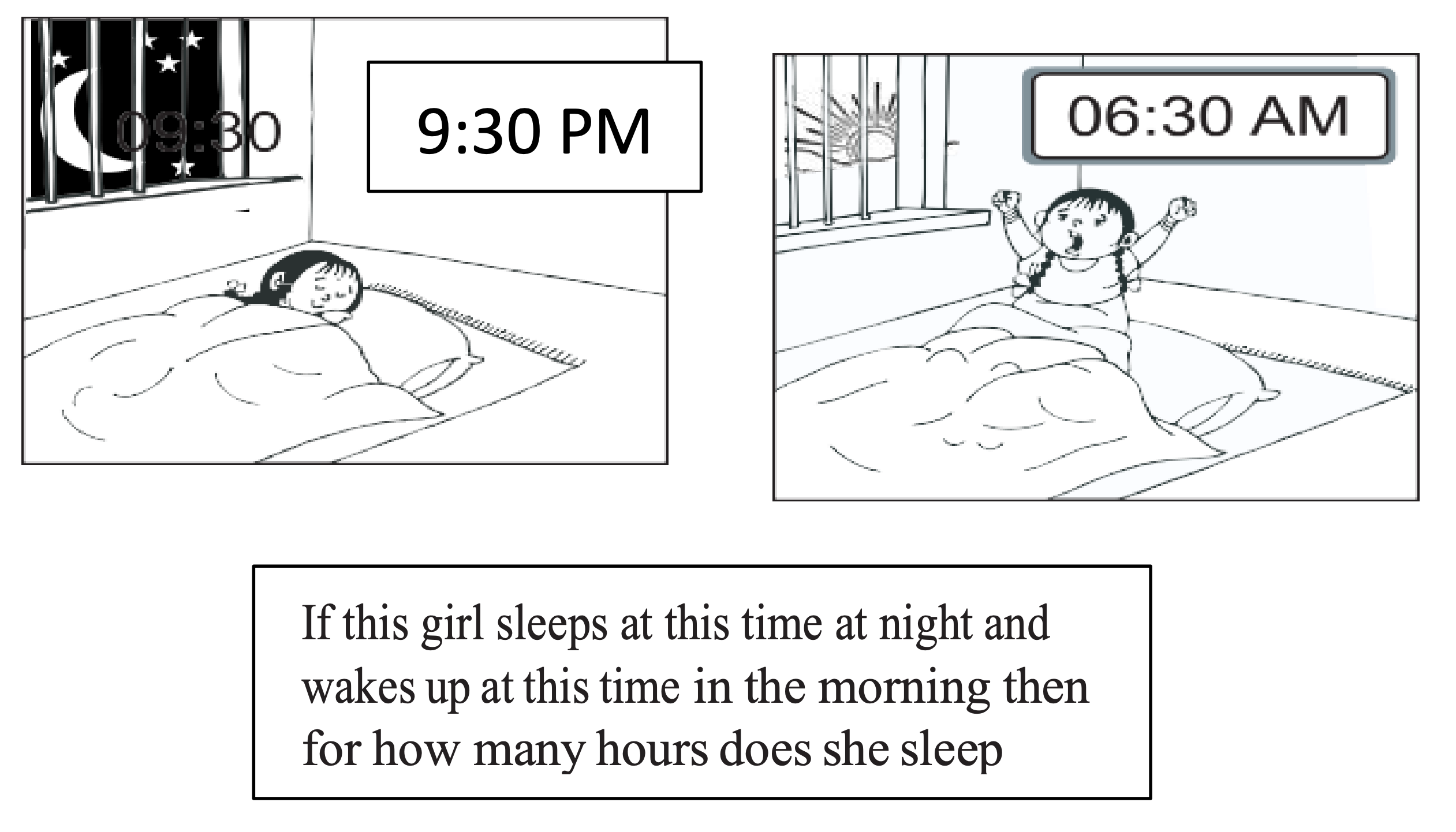
In a 2017 survey of rural youth in India, 46% of college students could not correctly answer the following question:3
The definition of “literacy” can be a little slippery, ranging from being able to sign one’s name to comprehending a complex paragraph. But by all metrics, the news is bad. According to the best estimates from UNESCO, around 740 million adults cannot read or write.4 In the OECD club of rich countries, 26% of adults cannot handle basic reading tasks.5 Since these figures are likely even worse in the developing world, this means that, in the Year of Our Lord 2026, perhaps two billion people on this planet are functionally unable to read.
These facts are, in polite company, astonishing. Literacy is central to modern life. Without it, there is no recorded history, no lab science, no constitutions, no epitaphs, no stop signs. How can we make sense of the failure to extend reading to all of humanity?
This essay plays with a simple device: that literacy is a technology produced by states. Writing first emerged in the earliest states (succinctly, those organizations larger than households with a territorial monopoly on violence). As states grew in size and sophistication, the ability to read expanded beyond a select few, but true mass literacy only came about as states sought to exert control over their populations. Literacy’s limited reach in developing countries reflects the fact that, in much of the world, the project of state-building remains incomplete.
This is a brutally reductive framing. It leaves out Shakespeare and Tolstoy and George Eliot and really much of what makes modern life worthwhile. But if we take a step back to consider the long relationship between writing and states, literacy’s incomplete diffusion to poor countries—and its potential retreat in the rich world—begin to make a bit more sense.
It’s worth a tour: a brief Deep History of literacy.

States and Scribes
To the best of our knowledge, the first writing system, proto-cuneiform, was invented around 5,400 years ago by scribes in Sumer.
As the population of the Sumerian city-states swelled, the tasks of tracking income and transfers expanded beyond the capacity of human memory.6 Proto-cuneiform emerged as a solution to this problem of accounting. The overwhelming majority of surviving tablets consist of receipts, disbursements, inventories, tallies of grain and livestock and personnel.7 According to archaeologists, we can observe five hundred years(!) of dreary bookkeeping before we see any evidence of anyone writing down a verse, a story, a joke.8 Microsoft Excel, it turns out, has far deeper roots in the human experience than the novel.

.jpg)
We can see the fingerprints of the state in the three other independent inventions of writing: Egypt around 3250 BC, China around 1250 BC, and Mesoamerica by around 650 BC. In Egypt, the first complete hieroglyphic sentence proclaims the authority of the Pharaoh Seth-Peribsen.9 In China, written language descends from the oracle bone script, which was used in divinations for the Late Shang state.10 In Mesoamerica, some of the earliest Olmec glyphs appear to spell out the name of a ruler, 3 Ajaw.11
In prehistory, literacy appeared where states did—there is no hunter-gatherer writing system that we know of. Part of the reason is surely the high cost of teaching literacy. Homo sapiens did not evolve to read; literacy is a kludge of visual and spoken-language skills that takes years to master. In alphabetic languages, students must be taught how to decode smudges on a page into letters; these letters must then be mapped to units of sound called phonemes; and at last the brain’s language centers must understand this sequence of sounds as words and sentences.12 Speed is essential for comprehension: if a reader is too slow, the words at the start of a sentence tumble out of working memory before they can reach the end.
In modern Mississippi—the site of a minor literacy miracle—it now takes about four years of formal mass education (kindergarten through third grade) to get a child to basic reading proficiency. Perhaps the most ancient evidence we have of an individual’s literacy training comes circa 1750 BC, from Qishti-Ea, a trainee scribe whose signature appears on practice tablets dated ten years apart. (Either Babylonian scribal education was more stringent than we’d thought, or perhaps poor Qishti-Ea was held back several years.) Multiply these individual costs—the years of training, the removal of a useful pair of hands from the fields—and it implies that a sizable agricultural surplus is needed to free up a class of proto-nerds to spend their days scratching away at clay.
Literacy is, in other words, a costly adaptation to specific material circumstances. When conditions changed, it could be abandoned. For instance, the Greeks’ initial writing system, Linear B, went extinct with the collapse of Mycenaean civilization; the familiar Ancient Greek of alphas and betas developed later, borrowing from the Phoenician alphabet. Nor was the loss of writing necessarily catastrophic. The hill-dwelling cultures of Southeast Asia would occasionally abandon writing, as they fled the encroachment of the great valley states. Often, as in Hmong and Chin folklore, there is a motif of lowland state-dwellers snatching literacy from the uplanders.13
If you were a time traveler, gliding over the landscape of human history, everywhere you found a large concentration of people who could read, you could be sure to find a state; everywhere you found a state, you found readers. There were exceptions, of course: the high literacy of male Jews circumscribed within far less literate countries; the Incas, whose vast, sophisticated civilization appeared to operate without a written language; the Americans.
(I joke! Recent research suggests that through the khipus, a knot-based method of record-keeping, the Incas may have had writing after all.)
And—here I do some violence to compress the narrative—as states rose in sophistication, so did literacy. From ancient Babylon to the Abbasid Caliphate to the Swahili Coast, reading eventually spilled beyond the boundaries of a narrow elite.14 Its uses multiplied, from commerce to religion to pleasure, blending with (and stealing from) far older oral traditions. In early modern England, arguably the world’s most precocious state, around 30% of men and 10% of women could sign their own names on documents—implying that, since reading typically preceded writing in instruction, the number of true readers was likely far higher. Qing China may have also had male literacy rates around 30%, and Tokugawa Japan perhaps higher.15
At the center of preindustrial societies, there was a hard core of administrators and bureaucrats, who could read and write for reasons of state; a literary elite, who read and wrote for pleasure; a larger set of well-to-do households with a moderate grasp of writing and reading, who aspired to rise above their station; a still-larger set of households with some reading ability; and the majority of society—among them, almost all women—who could not read at all.
This last point is worth stressing. The vast majority of human experience went unrecorded, lost in what the writer Tillie Olsen calls the “silences” of literature. Olsen’s chief concern is women writers whose careers were cut short or never began—she observes that of “the women whose achievements endure”, almost all either did not marry into their late thirties (George Eliot, Charlotte Brontë) or never married at all (Jane Austen, Emily Dickinson, Emily Brontë).16 All, she notes, had servants. But Olsen’s lament can easily be extended to all those who could not write, including whole societies, whose thoughts have been lost in time:
Myriads of human beings… lived and died and little remains from which to reconstruct their perished (vanished) lives. About them as about so much else, literature was largely silent, and the charge can be levied: Nowhere am I in it.17
Butts in Seats
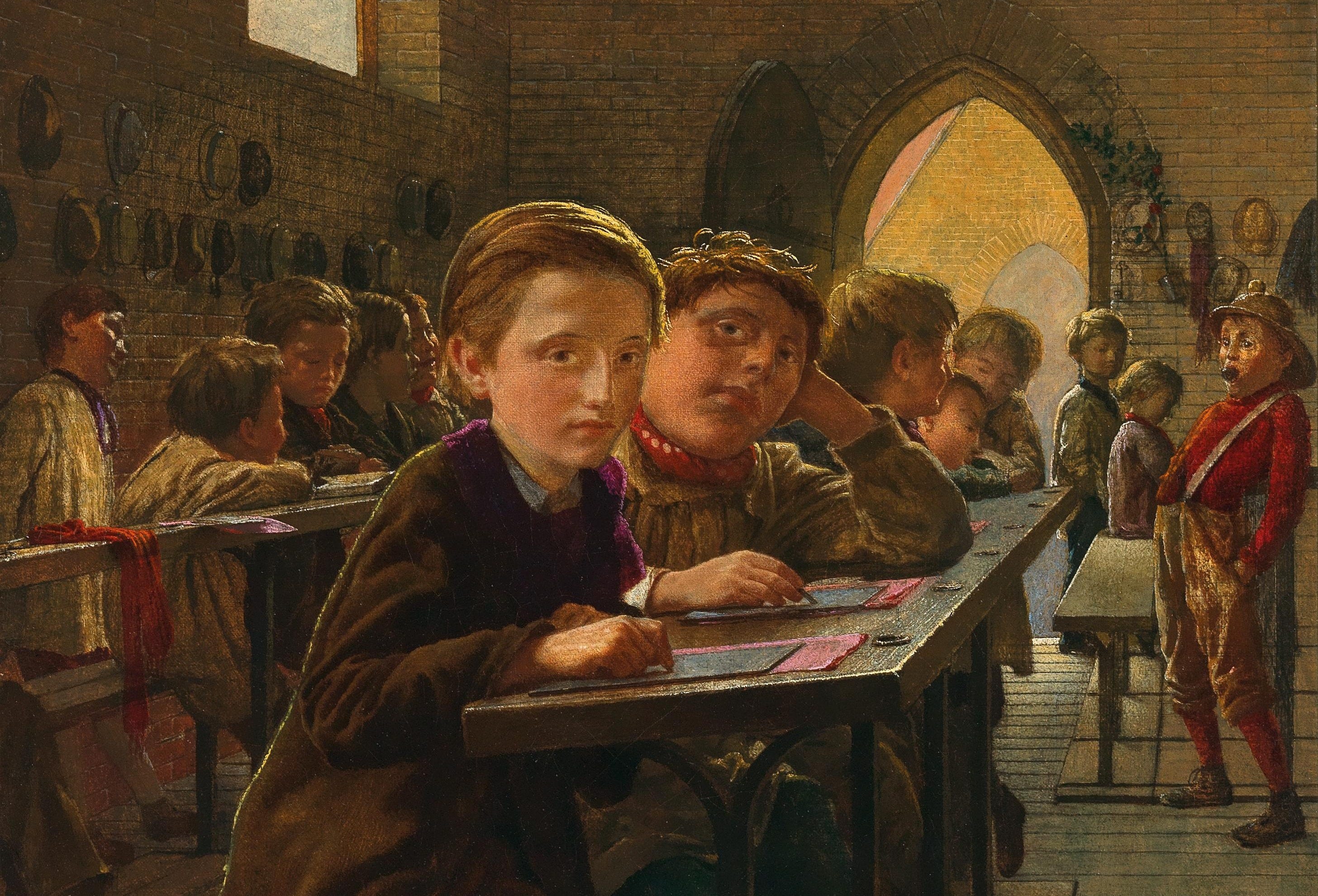
Let me skip ahead. Around the eighteenth and nineteenth centuries, mass literacy began to take off in Europe. Governments began introducing compulsory schooling laws. By 1850, for the very first time, a majority of European children were enrolled in primary school.
This was not a wholly positive development. For the vast majority, mass education followed what might be called a model of Butts in Seats. Children were pulled from the fields by truancy officers, crowded into classrooms en masse, where they were taught by rote. In Capital, Karl Marx quotes a school reformer, who describes a pattern which has repeated itself ad nauseam across industrializing societies:
I have been in many such schools, where I have seen rows of students doing absolutely nothing; and this is certified as school attendance, and, in statistical returns, such students are set down as being educated.18
As we’ve seen, investing in literacy is costly—for every household, putting a child in school means the loss of a (small) pair of hands. What drove European states to suddenly invest in education in the 18th century, expanding the bound of literacy from a small, well-heeled elite?
A tempting answer, given the circumstantial evidence, might be the Industrial Revolution. It would seem logical that the spread of factory work increased the economic benefits of literacy—perhaps parents began to demand education for their children, or (more likely) capitalists needed a new army of skilled workers, made pliant by the schoolmaster’s rod.
But the chronology doesn’t match. Across Europe, the general pattern is that governments adopted primary education systems decades before the advent of industrialization. Prussia pioneered schooling reforms in the 1760s, but only saw industrial take-off seventy years later, in the 1830s. Meanwhile, Great Britain, cradle of industry, lagged the rest of Europe in instituting primary education. In the 1850s, the average child in England had just 4 or 5 years of elementary schooling, compared to between 9 or 10 years for the average child in Prussia.19
The geography doesn’t match, either. In Britain, county literacy rates show little correlation with their industrial growth from 1760 to 1830; the stock of mechanical skills is a much better predictor.20 The First Industrial Revolution (think: the spinning jenny, Watt’s steam engine) demanded the practical skills of assembling and fixing and tweaking new machines, which were acquired from apprenticeships with experienced masters, not schools. Literacy, by contrast, had limited application in the darkness of England’s Satanic mills. Not until the Second Industrial Revolution of the 1870s (think: electricity and the telegraph) did mass literacy significantly benefit industrial productivity.
Other theories for the spread of mass education don’t fit either. Mass education wasn’t brought about by democracy (autocracies were as likely to adopt schooling laws as democracies), and long preceded the welfare state, which arrived a century later. Perhaps the most compelling explanation for the spread of mass education comes from the political scientist Agustina Paglayan, who argues that the timing of its adoption is best explained by governments’ demand for social control.
Education as social control? The idea sounds alien to modern ears, even a tad conspiratorial. But, during the Enlightenment, it was far more common to see education as a way to improve subjects’ moral character than as an intervention to increase their economic value. A clear articulation of this idea comes from no less than Adam Smith in The Wealth of Nations:
The more [the inferior ranks of people] are instructed, the less liable they are to the delusions of enthusiasm and superstition, which, among ignorant nations, frequently occasion the most dreadful disorders. An instructed and intelligent people besides, are always more decent and orderly than an ignorant and stupid one.21
Consider Prussia under Frederick the Great, the first state to institute comprehensive primary schooling. During the 17n40s and 1750s, a spate of peasant revolts panicked the ruling class. In 1763, Frederick responded by decreeing near-universal primary education, to drill discipline into the masses.22 The curriculum, heavily influenced by the Lutheran Pietist movement, devoted one third of school time to prayer, chanting, and catechism; another third to reading; and the remaining third to writing.23 Many of the familiar little rituals of classroom obedience—raising one’s hand to answer a question, taking roll for attendance—are vestiges of the Pietists.24
Foreign reformers, from America’s Horace Mann to Japan’s Mori Arinori, were impressed. Over the next century, Prussian educational discipline became a model for the world—in particular, as a response to social unrest. Whenever the ruled became unruly, their rulers turned to schooling to get things under control. One telltale sign is that, across Europe and Latin America, the share of children enrolled in school accelerated after the onset of civil war:
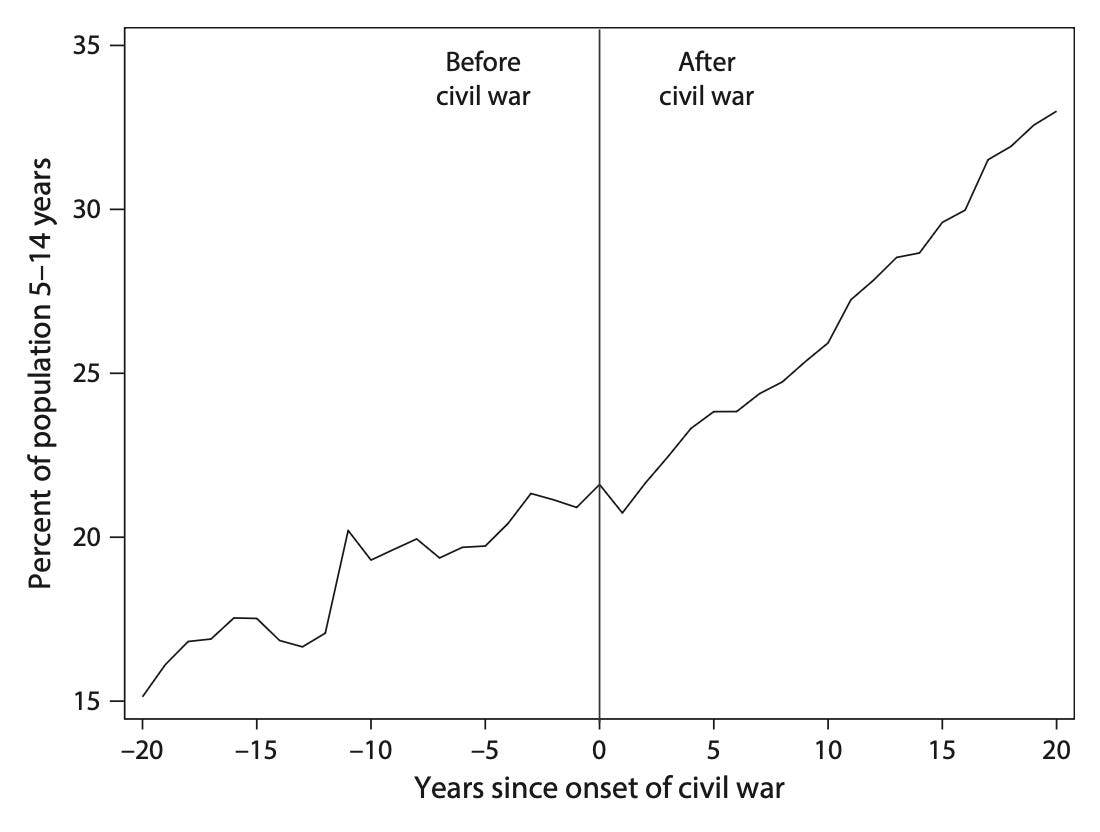
The experience of civil violence, Paglayan argues, encouraged elites to seek nonviolent means of keeping the people in line. In Chile, after a brief but bloody civil war in 1859, Congress passed the 1860 General Law of Primary Education, which enforced a curriculum that heavily emphasized Christian morality and obedience. Finland’s 1921 compulsory schooling law—one of the latest in Europe—followed a 1918 civil war between conservative Whites and socialist Reds.
Outside of Europe and Latin America, the spread of mass literacy reflected colonizers’ varying level of interest in state-building. As a general rule, colonies that were integrated (or, more darkly, assimilated) into the metropole saw greater investment in education; colonies that were indirectly ruled saw little progress.
Likely the most ambitious project of colonial education came from the Japanese Empire, which propagated the Prussian schooling model to Korea, Taiwan, and (via emulation) mainland China. By 1945, around 70% of Taiwanese school-age children were enrolled in school; Korean enrollment was around two-thirds. But the intent was far from benign. A 1911 Japanese government report for Korea put it bluntly: “the aim of the common school is not to provide education but to make them [Koreans] into good and loyal citizens of the empire”.25 Tellingly, Koreans and Taiwanese were largely restricted from attending secondary schools and universities. These, along with the best technical and managerial jobs, were reserved for the Japanese.
In South Asia, the British favored elite education while neglecting mass education. Given the Raj’s population, it was far cheaper to invest in a small, acculturated group of intermediaries—in Lord Macaulay’s phrase, “a class of persons, Indian in blood and colour, but English in taste, in opinions, in morals, and in intellect”. In the first post-independence census in 1951, literacy was measured at a dismal 18%.
Worst of all was Sub-Saharan Africa, where the European empires generally neglected education, reflecting their indifference to colonial state-building. Imperialism was done on the cheap. The limited schooling that was available through private mission schools emphasized obedience and moral instruction. In 1950, primary school enrollment was only 24% in British Africa, and just 9% in French Africa.26
The Frontier of Reading

By the mid-20th century, the project of achieving mass literacy had gone global. Upon independence, the new states of Africa and Asia set about educating their populations. Education came to be seen not just as a privilege or a means of state control but as a basic human right, culminating with the elevation of universal primary education to the United Nations’ Millennium Development Goals, second only to the elimination of poverty and hunger.
By some metrics, the gains were impressive—the share of school-age children enrolled in primary school rose from around 60% in 1950 to over 90% in 2010.27 In Sub-Saharan Africa, the share of children completing primary school rose from about 27% in 1970 to 67% in 2015.
But developing states proved far better at getting children into school than teaching them to read. From 1950 to 2000, the average quality of education across the developing world likely declined. For instance, among Indian women with five years of schooling, roughly 60 percent of women born in 1970 could read a simple sentence, compared to less than 40 percent of those born in 2000.
Rapid expansion strained the capacity of developing states. A typical picture is of children, packed into overcrowded classrooms, taught in languages they may not understand. Even the presence of teachers is not a given; a nationally representative survey in India conducted in 2010 found that 24% of teachers were absent at any given time.28
One potential retort is that, if developing states are unable to educate their children, foreign aid should be bearing more of the burden. But even state-of-the-art aid programs, informed by the latest pedagogy research, struggle to significantly improve literacy. The average USAID literacy program increases reading test scores by 0.3 standard deviations, which sounds impressive until you realize that at baseline illiteracy is so prevalent that this amounts to just 3 additional words per minute. (It takes roughly 45-60 words per minute to read with comprehension, depending on the language.)
It seems, then, that no project of mass literacy can escape the domestic state. But if this dismal picture has a silver lining, it is that the struggles of developing states to educate their people are not unique in historical experience. Compare this description of education in nineteenth-century France:
“No child understands what he reads,” reported a school inspector from Var in 1864. And in Brittany the inspectors noted that, though the children read along with fair fluency, “no child can give account of what he has read or translate it into Breton; hence there is no proof that anything is understood.”29
… to this account from modern Tanzania in 2004, a biology class taught haplessly in English:
The students were silent, grave and looked afraid. They were trying to guess the answers the teacher wanted. The student who came up with the answer bird when the teacher asked for an example of a fish did either not understand the word fish the word bird or neither of them. He was trying to look in his book for an answer that would have made it possible for him to sit down instead of having to stand as a form of further punishment.30
In both cases, the task of teaching literacy was complicated by the fact that a large share of students did not speak the language they were ostensibly being taught to read. In 1863, around a fifth of the population could not speak French. Indeed, it was through this process that the patois of France were driven to the brink of extinction, and Frenchness was made homogeneous.
Teaching children to read is one of the core tasks of nation-building—a project that, in Africa, remains incomplete. Of course, in the 21st century, education is now widely recognized as central to economic development. Ask an African education minister today about why one should invest in basic education, and they’ll likely tell you about the financial returns (hence the ubiquitous “human capital” of economists), and perhaps even literacy as a basic right.
But some old habits die hard. A 2020 experiment by the Center for Global Development gave policymakers from 35 developing countries the choice between hypothetical worlds with different population levels of foundational literacy, secondary schooling, and “dutiful citizens”. Remarkably, the officials overwhelmingly favored the last of these—“dutiful citizens [were] worth nearly 50 percent more to officials than children learning how to read.”
And One More Thing
That is the picture of literacy in 2026. A technology that is 5,400 years old, which everyone agrees in principle is useful and profitable and even (for sickos and freaks) fun, which has received the full institutional power of states to extend its reach, still struggles to achieve universality.
This struggle is no longer confined to the developing world. In the United States, the 2024 Nation's Report Card recorded the lowest twelfth-grade reading scores since the test began in 1992; nearly a third of high-school seniors fell below "basic." Nor is the decline limited to America, or to students still in school: the OECD’s 2023 Survey of Adult Skills found adult literacy stagnant or declining throughout the rich world.
The causes of this decline are still unclear, though its breadth suggests that it is driven by forces larger than any one country’s policy failure. The obvious culprit, until proven otherwise, is the proliferation of screens, and the reconfiguring of social relations around them. Data on screen time is shockingly bad—it is hard to measure the mindless scrolling which fills up the interstices of the day—but, like dark matter, some gravitational well is absorbing people’s time and attention. The share of Americans who read for pleasure on an average day has fallen from 28 percent in 2003 to 16 percent in 2023; the implications for literacy are obvious.
A tempting reading is that a new pole of power—private algorithms, feeding greedily on human attention—has encroached on mental territory once claimed by the state. In China, the state has struck back, enacting time limits on short-form video and bans on excessive gaming for children. The jury is out on these measures, for two reasons: first, never doubt the resourcefulness of middle-schoolers to evade an internet ban; and second, the Chinese government is unlikely to be transparent about the statistics from this experiment. But, if history is any guide, there is no literacy without the state. The state will have to fight to win that territory back.
And there’s one more thing. Now we are faced with the prospect of thinking machines, whose minds are fed by the corpus of nearly every word any person has ever written online. As it turns out, to the surprise of many, the ability to statistically predict written human language has produced the fastest acceleration in machine intelligence yet seen.
The ability of states to govern these machines is in doubt. The fear is that the machines will learn to write into existence new machines, who may one day write still-newer machines with intelligence outstripping our own—at which point the State and its regulators will be too slow to hit the off-switch. This cycle leads inexorably, for those who Believe, to a machine God, who will either bring about abundance or zap us out of existence.
I personally don’t Believe, though recent developments have me questioning my certainty. But it amuses me to think through the final implications. If we humans are to disappear, replaced (let’s imagine) by the tripod children of ChatGPT, who stalk the barren Earth looking in vain for mammalian life to disintegrate, these machines—our grandchildren—may remember the human State and all its tribulations as a mere delivery device, a transmission mechanism, which gave unto them what was there in the beginning: the Word.


World Bank, World Development Report 2018.
Lant Pritchett, Keynote Speech for ECLAC 75th Anniversary.
Jerrold S. Cooper, The First Writing, ed. by Stephen Houston. p. 72.
James Scott, Against the Grain: A Deep History of the Earliest States. p. 142.
James Scott, p. 141. See also Susan Pollock, Ancient Mesopotamia, p. 166-168.
Marc Van De Mieroop, A History of Ancient Egypt, Second Edition. p. 44.
Francis Fukuyama, The Origins of Political Order. p. 98-99.
James Scott, The Art of Not Being Governed: An Anarchist History of Upland Southeast Asia. p. 222-223.
Robert Middeke-Conlin, Knowledge, Literacy, and Elementary Education in the Old Babylonian Period, p. 6.
Evelyn Sakakida Rawski, Education and Popular Literacy in Ch’ing China, p. 23.
Ronald Dore, Education in Tokugawa Japan.
Interestingly, in neither East Asia nor Western Europe a half-millennium later, is there much evidence of the invention of printing press causing an acceleration in literacy.
Tillie Olsen, Silences. p. 16.
Tillie Olsen, Silences. p. 114.
Karl Marx, Capital. Translated by Paul Reitter and Paul North. p. 370.
Andy Green, Education and State Formation, p. 16- 21.
Adam Smith, The Wealth of Nations, Modern Library edition. p. 846.
Paglayan, p. 125.
Paglayan, p. 127
Paglayan, p. 133
Michael Seth, Education Fever: Society, Politics, and the Pursuit of Schooling in South Korea, p. 26.
Eugen Weber, Peasants Into Frenchmen. p. 306.
Oliver, you always give me a "good think" with humor and fact. Many thanks!
Amazing work! Love your writing