


Public Subsidy / Private Accumulation: The Political Economy of Singapore’s Public Housing, by Chua Beng Huat. 2024.
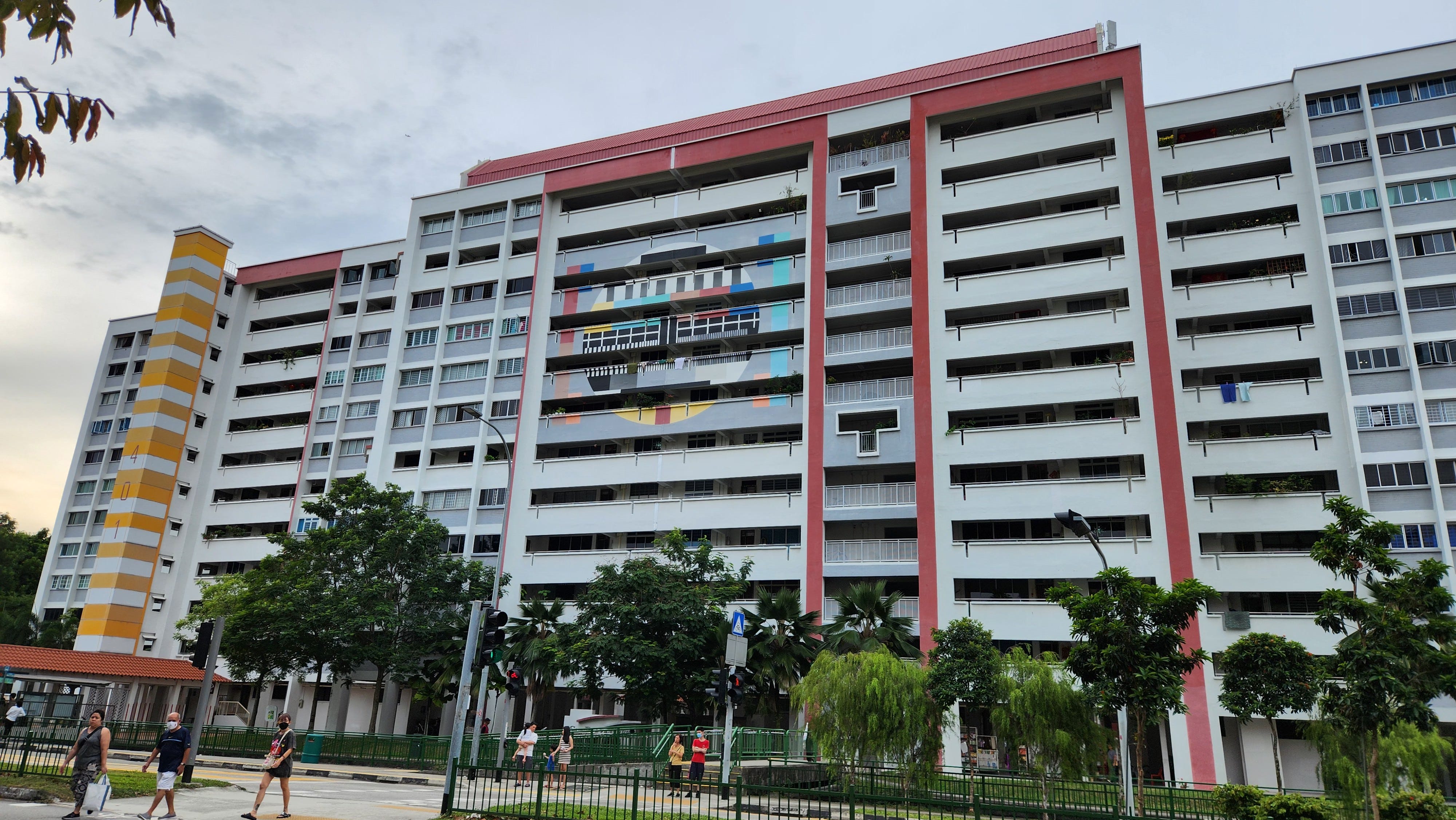
For a certain kind of housing policy nerd, Singapore’s model of public housing is the stuff of legend. 76% of Singaporeans live in public housing units, commonly called HDBs after the government’s Housing and Development Board. Unlike public housing in America, which sadly evokes cockroaches and black mold, HDB units are generally modern, clean, and safe. The homeownership rate is over 90%. Homelessness is rare.
Since their institution in the 1960s, the HDBs have been the gold standard for how to house a rapidly growing urban population in a developing country. (This blog’s first post explored public housing as a development policy.) Now even rich Westerners, beset by housing crises, peer enviously on.
From afar, Singapore is often flattened into a Utopia, some kind of Platonic technocracy where the grime of politics has been abolished by fiat. Indeed, it’s tempting to view Singapore’s housing policy as a purely technical exercise, reducible to a set of savings schemes and planning policies that can be turned like dials to maximize social efficiency.
Public Subsidy / Private Accumulation, by Chua Beng Huat, a professor emeritus of sociology at the National University of Singapore, complicates this sterile picture. It’s a concise, lucid account of the politics of HDBs, and a natural entry-point to learn about Singapore.
Building a Nation
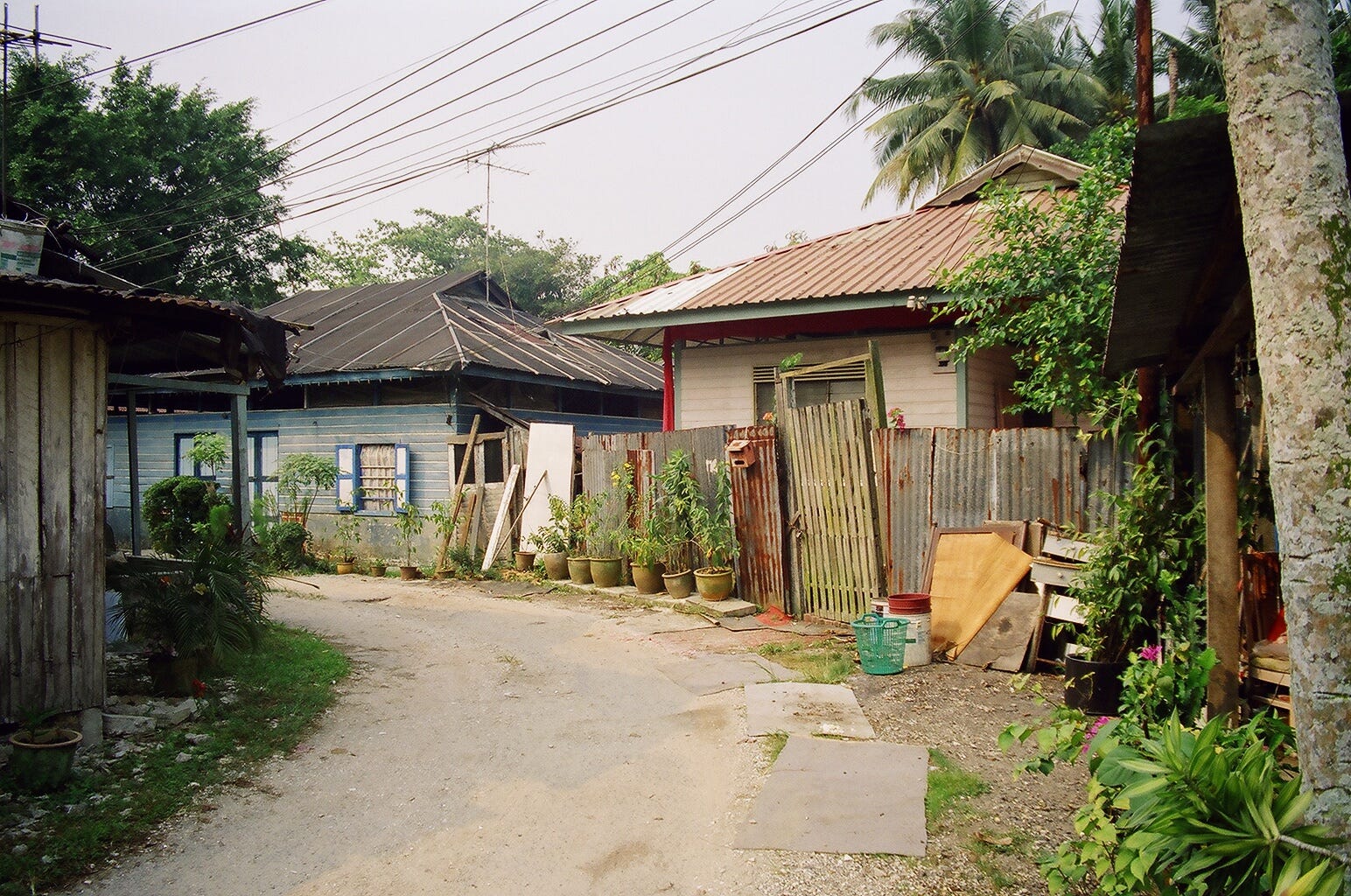
When Lee Kuan Yew’s People’s Action Party (PAP) came to power in 1959, most Singaporeans lacked decent housing. A third of the population lived in crowded shophouse apartments in the city center, and perhaps another third lived in kampongs (Malay for “villages”)—the kind of informal settlements that crop up on the margins of cities everywhere in the developing world. Pigs and chickens roamed around amongst the human residents; there was no sewage or electricity; hygiene was poor; fire safety was worse. A 1961 fire in the kampong of Bukit Ho Swee destroyed 2,800 homes, and left around 16,000 people homeless.

The Housing Development Board had been created in 1960, but the disaster of Bukit Ho Swee only underscored the political urgency of addressing housing. Lee and Finance Minister Goh Keng Swee—both schooled in the British Fabian tradition—were likely influenced by Britain’s postwar expansion of social housing under Labour. Governments that failed to deliver on housing would be punished; even victorious Churchill had been kicked to the curb in a remarkable act of democratic unsentimentality.
Moreover, for young Singapore—ethnically fractious, (post-1965) newly independent, still rather poor—providing housing was far more important than just winning elections. In his memoirs, Lee gives a famous account of the HDB as central to nation-building:
… [I] was determined that our householders should become home owners, otherwise we would not have political stability. My other important motive was to give all parents whose sons would have to do national service a stake in the Singapore their sons had to defend. If the soldier’s family did not own their homes, he would soon conclude he would be fighting to protect the properties of the wealthy. I believe this sense of ownership was vital for our new society which had no deep roots in a common historical experience.
These lofty goals were constrained by the fiscal realities of a developing country. The 1959 Housing and Development Board Act stipulated that public housing had to reclaim a “reasonable return to capital invested”, meaning that it could not be sustained on public subsidy. Nominally a democratic socialist, Lee was still opposed to a strong social safety net on principle: Singapore would have no minimum wage and minimal unemployment benefits.
The HDB system needed to square the circle: addressing a real social need without breaking the bank. Two policy instruments were crucial.
The first was a scheme to make units affordable on the demand side. To keep costs down, the first HDB units (called “emergency flats”) were spartan one-bedroom flats with shared toilets and kitchens. The next tranche were more spacious two-bedrooms, which were tied to 99-year leases which simulated homeownership. Demand was tepid to start; few could afford the up-front payments. But, after 1968, when citizens were allowed to direct their contributions to the Central Provident Fund (CPF)—the compulsory social security scheme—towards an HDB purchase, demand for units shot up, from 3,000 in 1967 to 70,000 in 1968.
The other key policy ingredient was on the supply side—namely, the 1966 Land Acquisition Act, which gave the government sweeping powers to acquire any land it needed for “national development”. Critically, compensation was tied to the prices at the date of the statute, meaning that as the economy developed the state could buy land at below-market rates. The government’s principles were clear:
No landowner should benefit from development which has taken place at public expense… [and] the price paid on acquisition for land should not be higher than what the land would have been worth had the Government not carried out development generally in the area. (p. 47)
Henry George could not have put it better.
The victory of Singapore’s HDB was near-total. By the mid-1970s, “a quarter of a million people… living in degenerated city slums and another one-third of a million in squatter areas” had been rehoused (p. 55). By the mid-1980s, 85-90% of people living in HDBs were homeowners.
Victory was not costless. Chua (who grew up in the burned-down Bukit Ho Swee) is clearly nostalgic for the lost kampong communities. An older, messier Singapore, with its own illegible village traditions, has been replaced by the constructions of a ubiquitous, all-seeing state. Indeed, the HDB is the site of social engineering that would make most libertarians retch. Blocks and neighborhoods follow racial quotas based on national demographics (75% Chinese, 15% Malay, 8% Indian), to break up ethnic enclaves and promote the government’s goal of racial harmony. Eligibility for a unit means conforming to the government’s social preferences, like for married two-parent, heterosexual households.
Moreover, as Singapore got richer, the original intent of the HDB became diluted. In Chua’s account, the Original Sin was committed in 1971, when HDB owners were first allowed to resell their homes on an open market (after a required one-year timeout before they could apply for another unit). Before, resale units had to be sold at their original price, net of depreciation; now, the market was allowed to set prices. After 1979, the one-year timeout was abolished, and households began to profit from rising housing prices by quickly turning over resale units. Gradually, what began as an “emergency” good, supported by the state’s ability to seize land for the public good, morphed into what Chua calls an “asset-based welfare product”.
This shift can be seen in the changing rhetoric at the highest levels of power. Compare Lee’s description of housing as a cornerstone of nation-building, to the 2011 words of his son, Prime Minister Lee Hsien Loong:
The house is much more than a secure roof over their heads… [it] is also a major way to level up the less successful and to give them a valuable asset and a retirement nest egg. (p. 57)
A Polity Without Politics?
The coalition of homeowners proved to be electoral dynamite for Lee’s People Action Party. 1963’s Operation Cold Store (see my previous post) broke the back of the opposition through force; but the PAP’s promise of fast economic growth, clean governance, and public housing was also genuinely popular. Over sixty years, the PAP has won every election—including thirteen years (1968-81) of parliaments without a single opposition member. Because of this continuous success, it’s easy to misread Singapore as a polity without politics, and to see the PAP as gliding through elections as placidly as a duck over water.
But there’s some furious paddling going on beneath the surface.
Chua’s careful survey of Singaporean electoral history reveals that housing is a recurrent cause of political discontent. In 1981, Worker Party candidate J. B. Jeyaretnam won a chance by-election in Anson Constituency to become Singapore’s first opposition MP in sixteen years. This minor setback for the PAP can be traced directly back to housing: over 700 families in Anson had been cleared from their homes to make way for a new port facility, and the government had refused to prioritize residents for resettlement.1

In 1984, after the opposition Singapore Democratic Party also won a seat in Potong Pasir, the Minister of National Development threatened that any housing estate in a constituency that voted against the PAP would be last in line to be served by the HDB. This punitive policy stood for almost thirty years, excluding opposition constituencies from the HDB’s annual billion-dollar upgrading program. The threat was clear—in the words of Prime Minister Goh Chok Tong in 1996, “your estate through your own choice will be left behind. They’ll become slums.”
The 2011 general election—the greatest scare for the PAP in forty years—is perhaps the starkest case of housing intruding on national politics. Because Singapore had weathered the global recession relatively well, foreign capital and high-skilled workers had flowed in, driving up housing prices. The opposition called for reforms, like pricing new units based on costs, to make housing more affordable. The government’s response was tone-deaf—the Minister of National Development (who oversees the HDB) argued that such reforms would be an “illegal raid” on the national reserves, since it would lower the rents the government could charge private developers on public land. The PAP lost seven seats, their worst electoral performance since independence.
To their credit, the PAP was quick to respond to voters’ rebuke. A new Minister of National Development, Khaw Boon Wan, introduced a set of “market cooling” measures: he untethered the price of new HDB units from the market price, increased annual housing production to 25,000 units, and symbolically restricted expatriates’ ability to speculate on public housing units. These measures were broadly successful at lowering prices, and in the 2015 elections the PAP won a resounding victory, with its vote share rising from 60 to 70 percent.
Global Singapore
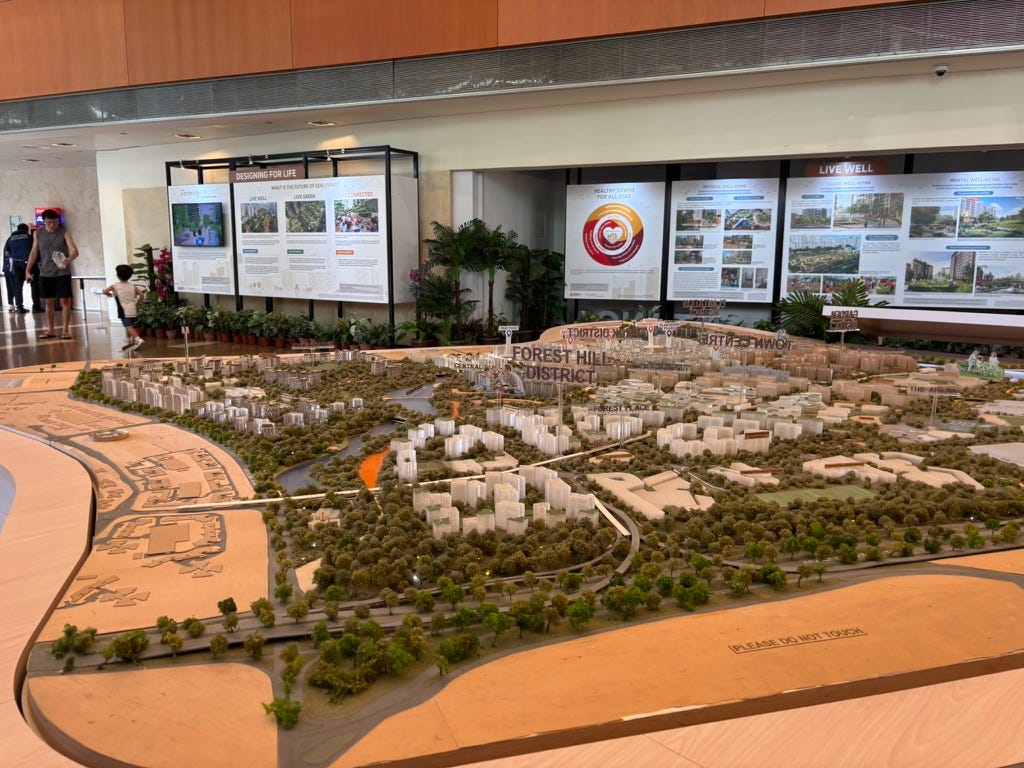
This brings us to the present day, where Singapore’s peculiar housing system has become a model for the world. This is true in two ways.
The first is that the Singapore housing model has become a widespread object of envy. It would be malpractice to ignore how well Singapore has managed rising housing costs compared to other rich countries. As of 2024, the average home costs 3.8 times the median income, compared to 4.8 times in the United States, 9.7 times in Australia, and 16.7(!) times in Hong Kong (Bird 2025, p. 238). Housing ownership is broad-based: 25% of Singapore’s housing wealth is owned by the bottom 50% of asset owners (Bird 2025, p. 252). This performance has won admirers across the West, particularly in the Yes In My Backyard (YIMBY) movement. Another eager pupil is China, which has built whole model cities with Singaporean advice.
But Singapore is instructive to the world in another sense. There is trouble in YIMBYLand: since the Covid pandemic, the price of resale HDBs has risen over 50%. The fact that price increases are less bad than in peer countries is cold comfort to voters; Singapore is not exempt from the generational and class conflict over housing affordability that is playing itself out across the developed world. The old, who depend on housing as a retirement asset, want prices to go up. The young, who want to move out and start families, want prices to go down. Both groups cannot be satisfied at once.
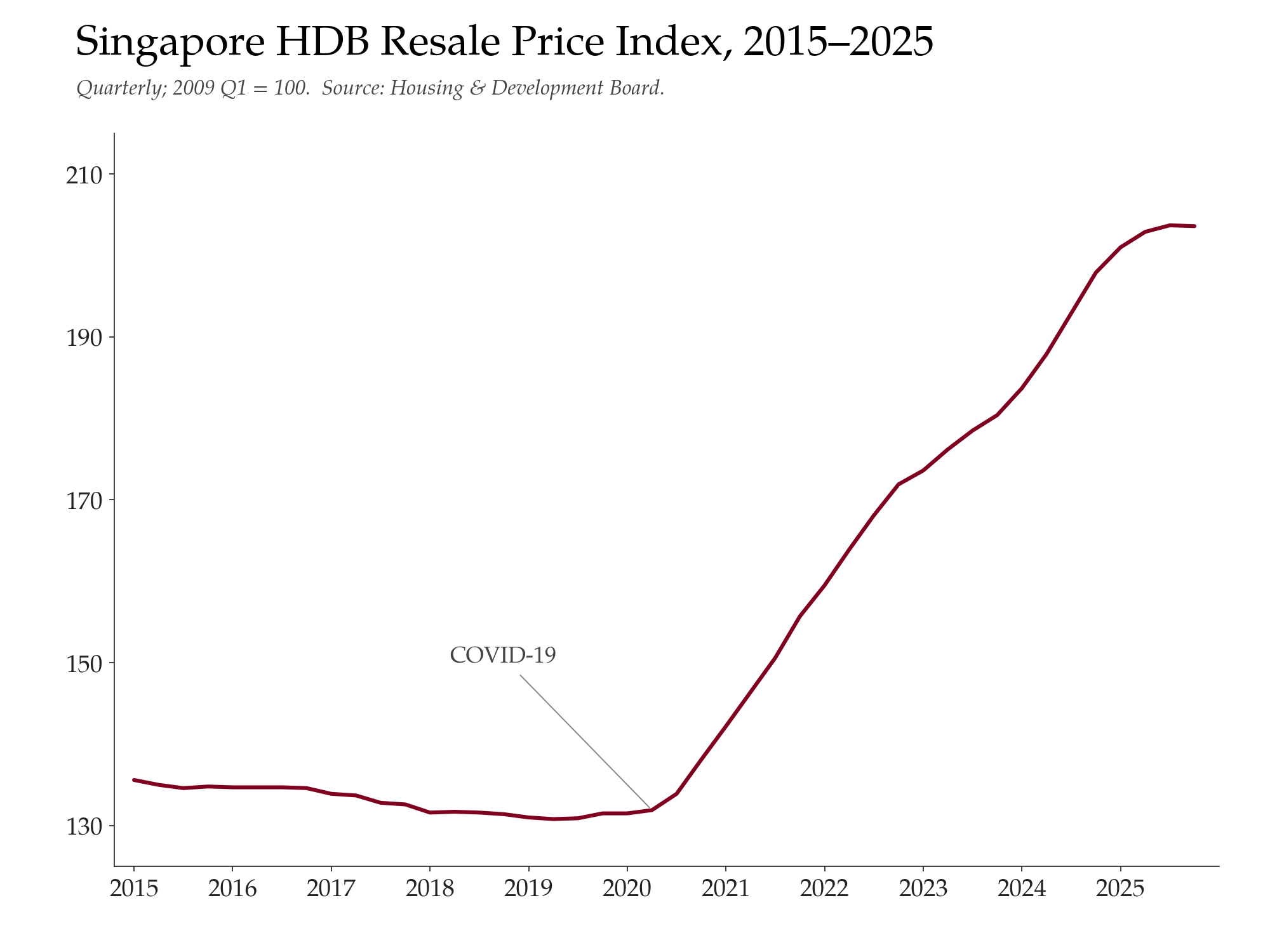
The government recognizes the problem, but its muddled response reflects its conflicting allegiances. One scheme is to give cash grants to subsidize first-time homebuyers, which in mainstream economics is a little like pouring gasoline onto the fire. A better approach is to boost supply by building more HDBs—but this requires patience. Singapore builds quickly (the HDB added 73,000 units from 2021-4), but not fast enough to keep up with the demands of its citizens.
Ultimately, Chua argues, the PAP’s loyalties lie with the HDB homeowners who form the foundation of their voting base, rather than with younger, new entrants. It simply cannot allow housing prices to fall significantly. Having tied people’s welfare to the performance of the market, the PAP is now beholden to the political consequences.
Allow me to close with a digression. Despite the strangeness of Singapore’s institutional structure, the political economy resembles nothing other than the United States, where, in the absence of a strong welfare estate, housing remains the most important retirement asset, and homeowners a politically powerful group. One person who has notably grasped this logic is Donald Trump, who said in February:
Every time you make it more and more and more affordable for somebody to buy a house cheaply, you’re actually hurting the value of those houses. And I don’t want to do anything that’s going to hurt the value of people that own a house, who for the first time in their lives are walking around the streets of whatever city they’re in, very proud that their house is worth $500,000, $600,000, $700,000.
The conversation around housing feels to me eerily reminiscent of that of global trade around 2015. On one side, there is the policy consensus: every supply-and-demand graph, every academic journal, every white-paper, every respectable economist you’ve ever heard of. On the other, you have a certain Manhattan property developer with a preternatural sense for American grievance. That he has identified homeowners as a potential constituency should give us YIMBYs some pause. Even in seemingly quiescent Singapore, the politics of housing is fraught enough to make the mighty PAP quake in its boots.
Thanks to Abhi Gupta, Caleb Wroblewski, and Thiya Poongundranar for reading this draft.
A few other Singapore-related posts:
"You Can Even Kill Them": Albert Winsemius and the Rise of Singapore

There are two things that everybody knows about Singapore. One is that it is fabulously rich. The other is that it is a one party-state which subscribes to a meticulous brand of authoritarianism—something to do with chewing gum and the death penalty.
Leasing Like a State, or: Public Housing is Development Policy

By 2050, around 950 million people in Africa will move to the cities. They will need places to live, which do not yet exist.
JBJ was reelected in 1984, but was expelled from Parliament in 1986 on the charge of making false statements about the Worker’s Party’s accounts. Anson was subsequently gerrymandered out of existence; its boundaries were absorbed into Lee Kuan Yew’s constituency.
An interesting puzzle for an economist. If you were to design a financial asset to achieve what housing did for Singapore -- give citizens a stake in society, an incentive to keep things peaceful and stable -- without the NIMBY downsides, how would you do that?
For bonus points, make it so the new asset's value correlates quite strongly with overall prosperity and flourishing. The correlation should be so strong that merely by making this asset a large component of the legislator pension fund, the financial interest of the legislators becomes strongly aligned with the interests of the polity.
Housing is illiquid and can't be moved between jurisdictions. Your new asset should perhaps share these properties.
Off the top of my head, maybe instead of housing, green cards (permanent residency cards) could be a tradeable and transferable asset. If the price of green cards goes up in value, that indicates that lots of rich people want to move to your city, which probably means it is a nice place to live. But what if rich people want to move there simply because it is a tax haven? To address this issue, every green card could also generate a stream of dividend payments from the city tax revenues. So by holding the green card you are a sort of "citizen-shareholder" of the city.
To prevent short-term speculative trading (if that's problematic), you could make it so green cards can only be bought and sold at an annual auction which is highly regulated. You could also tax hoarders of green cards.
A possible downside of this scheme is that citizen-shareholders might want to needlessly restrict immigration in order to keep green cards scarce and maintain their value. Similar to artificial housing scarcity. Would this be a big issue in practice? Corporations sometimes issue stock even though it dilutes existing shareholders. Many people want to live in NYC despite the fact that it has over 8 million residents.
There is probably some clever way to reduce the incentive of green card holders to keep green cards scarce. For example, green cards could be printed with serial numbers starting from 0, 1, 2, 3, etc. The fewer digits in the serial number, the greater the fraction of city tax revenues that the citizen-shareholder gets. So old residents of the city have an incentive to see the city expand, thus expanding the municipal tax base and increasing their passive income.
Anyways, besides being fun to think about, I imagine this might have interesting implications:
* For charter cities, creating the right incentives for city investment and growth
* Land value taxes which under ordinary circumstances would disenfranchise homeowners. The same bill that passes the LVT could also hand out shares in "Singapore Inc" to every current homeowner, where the share pays out a dividend based on LVT revenues, designed so their net assets stay roughly constant and their portfolio is no longer as exposed to fluctuations in neighborhood property values? (Although to be fair, being exposed to fluctuation in neighborhood property values might actually be a *good* thing, if it helps you persuade your kids to avoid spray painting graffiti and stuff)
Do you think other countries should allow workers to spend mandatory savings on mortgage payments? Would it be a good idea even in countries with relatively little formal employment?